Wearing dentures can restore your smile, improve chewing, and make everyday activities more comfortable. But dentures need regular care to stay clean, comfortable, and functional. Knowing the right approach to denture care Wellington can help reduce plaque and food buildup while supporting good oral hygiene.
Whether you wear full dentures, partial dentures, or are considering dentures in Wellington, a consistent cleaning and maintenance routine is important. This guide explains how to clean dentures safely, how to look after your mouth, and when professional denture care may be needed.
Why Is Denture Care Important?
Dentures sit in the mouth for many hours each day and can collect food particles, plaque, and stains. Poor cleaning can contribute to unpleasant odours, irritation, staining, and discomfort.
Proper denture maintenance involves more than brushing the dentures. You also need to clean your gums, tongue, palate, and any remaining natural teeth.
Regular care can help:
- Keep dentures cleaner and fresher.
- Reduce food and plaque buildup.
- Maintain a comfortable fit.
- Protect remaining natural teeth.
- Support healthy gums and oral tissues.
- Identify damage or changes in fit early.
How to Clean Dentures Properly
1. Rinse Your Dentures After Eating
Rinsing your dentures with water after meals can help remove loose food particles before they accumulate.
Handle your dentures carefully because they can be slippery when wet. Cleaning them over a basin containing water or a folded towel can help reduce the risk of damage if they are accidentally dropped.
2. Brush Your Dentures Daily
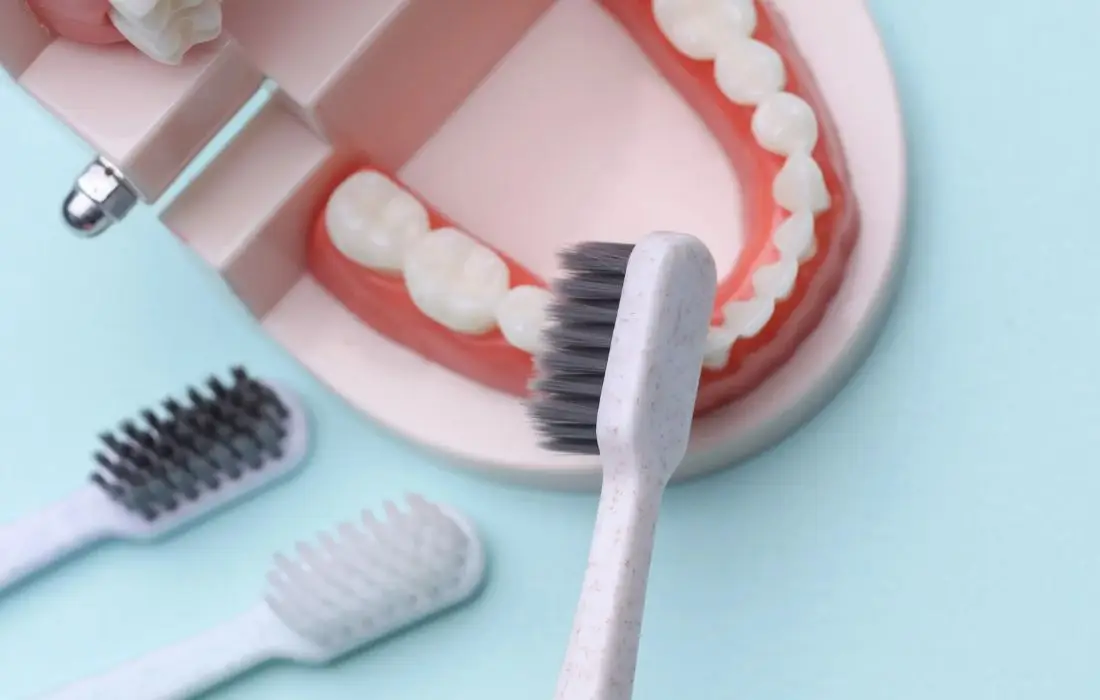
Daily brushing is an important part of cleaning dentures. Use a soft denture brush or another brush recommended by your dentist.
Gently clean all surfaces of the denture, including the areas that contact your gums. Avoid aggressive scrubbing, which can damage the surface.
Many conventional toothpastes contain abrasive ingredients that may scratch some denture materials. Ask your dentist or denture provider which cleaning product is appropriate for your dentures.
3. Use a Suitable Denture Cleaner
A denture-cleaning solution or tablet may help remove deposits that brushing alone does not eliminate.
Always follow the product instructions and make sure the cleaner is suitable for your particular dentures.
Avoid using boiling or very hot water. Excessive heat can potentially distort the shape of dentures and affect their fit.
4. Clean Your Mouth Every Day
Taking care of your dentures does not replace oral hygiene.
Gently clean your gums, tongue, and the roof of your mouth. If you have remaining natural teeth, brush them carefully with fluoride toothpaste as recommended by your dental professional.
If you wear partial dentures, pay particular attention to the teeth supporting the denture because these teeth remain vulnerable to plaque and decay.
Denture Maintenance Tips for Everyday Care
Good denture maintenance can help extend the useful life of your dentures and keep them more comfortable.
Remove Dentures When Recommended
Many denture wearers are advised to remove their dentures overnight to allow the oral tissues to rest. However, individual recommendations can differ.
Ask your dentist about the most appropriate wearing schedule for your particular situation.
Store Dentures Correctly
When your dentures are not being worn, store them according to your dentist’s or denture manufacturer’s instructions.
Some dentures should be kept moist to prevent them from drying out. Use an appropriate denture-soaking solution or water when recommended.
Keep dentures somewhere safe and away from children or pets.
Check for Damage
Regularly inspect your dentures for:
- Cracks
- Chips
- Sharp edges
- Broken components
- Changes in colour or surface texture
- Loose or damaged attachments
Never attempt to repair damaged dentures with household glue or other DIY products. Improvised repairs can damage the denture and may make it unsafe or uncomfortable to wear.
How Often Should Dentures Be Professionally Checked?
Even if your dentures appear to be working normally, your mouth can change over time. Changes in your gums and jawbone can affect the way dentures fit.
Arrange a dental review if your dentures:
- Feel loose or move while eating.
- Cause recurring sore spots.
- Make chewing difficult.
- Affect your speech.
- Have cracks or broken components.
- No longer feel comfortable.
Your dentist can determine whether your dentures need an adjustment, relining, repair, or replacement.
Common Denture Care Mistakes to Avoid
Some everyday habits can shorten the life of dentures or cause unnecessary discomfort.
Avoid Abrasive Cleaning Products
Using abrasive toothpaste or harsh household cleaners may scratch or damage denture surfaces. Choose products designed for dentures unless your dentist recommends otherwise.
Do Not Use Boiling Water
Hot water can change the shape of some dentures. Use cool or lukewarm water when cleaning or rinsing unless the manufacturer’s instructions specify otherwise.
Do Not Ignore a Loose Fit
A loose denture is not simply an inconvenience. Changes in fit may make eating and speaking harder and can cause irritation.
If your dentures no longer fit properly, arrange a professional assessment rather than trying to reshape them yourself.
Do Not Forget Your Natural Teeth
If you have partial dentures, your remaining teeth still require daily brushing and professional dental care. Maintaining these teeth can help support your overall oral health.
Dentures Wellington: When Should You Consider New Dentures?
Proper care can help maintain dentures, but they do not last forever. The need for replacement depends on the condition of the dentures and changes in your mouth.
You may need to discuss replacement if your dentures are repeatedly breaking, no longer fit comfortably, have significant wear, or make chewing difficult.
Your dentist can assess whether adjustment or relining could solve the problem or whether new dentures would provide a better result.
Can Denture Adhesive Replace Proper Maintenance?
Denture adhesive can help improve retention for some people, but it should not be used to compensate for a severely loose or poorly fitting denture.
If you find yourself needing increasing amounts of adhesive to keep your dentures secure, arrange a dental assessment. Your dentist can determine whether the denture requires adjustment, relining, replacement, or another treatment.
Read our related blog: Tooth Replacement Options in Wellington: A Complete Guide
Frequently Asked Questions About Denture Care Wellington
1. How often should I clean my dentures?
Dentures should generally be cleaned every day. Rinse them after meals when practical and brush them gently using an appropriate denture-cleaning product.
2. Can I use normal toothpaste to clean my dentures?
Some regular toothpastes can be too abrasive for denture materials. It is better to use a product recommended for dentures or ask your dentist for specific advice.
3. Should I sleep with my dentures in?
Many people are advised to remove their dentures overnight to allow their oral tissues to rest. However, your dentist may recommend a different routine depending on your individual circumstances.
4. How do I stop my dentures from smelling?
Clean your dentures thoroughly every day, maintain good oral hygiene, and store them correctly when not in use. If an unpleasant smell continues despite good cleaning, arrange a dental assessment.
5. How often should I have my dentures checked?
Follow the review schedule recommended by your dentist and book an appointment sooner if your dentures become loose, damaged, painful, or difficult to use.
Take Better Care of Your Dentures with Real Dentistry
Good denture care can make a significant difference to comfort, hygiene, and everyday confidence. If you are experiencing loose dentures, sore gums, difficulty chewing, or concerns about cleaning and maintenance, Real Dentistry in Wellington can help you understand your options.
Don’t let uncomfortable or poorly fitting dentures affect your daily life. Contact Real Dentistry today to discuss your denture needs and arrange an appointment.
- Call: 04 387 9392
- Email: info@realdentistry.co.nz
- Book an appointment: Contact Real Dentistry