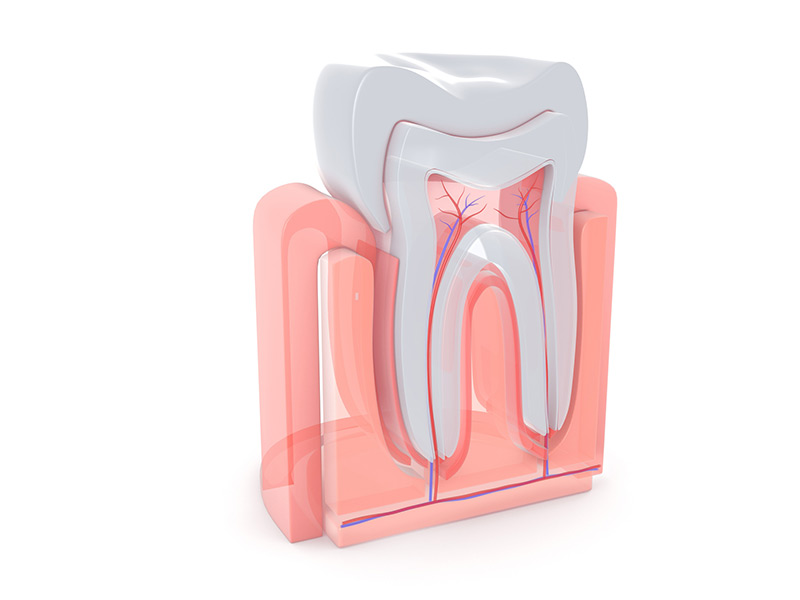
Root canal treatment involves several stages. The number of appointments depends on the tooth, the condition of its root canals and the complexity of treatment.
Step 1: Dental Examination and X-rays
Your dentist will examine the affected tooth, discuss your symptoms and may take X-rays or perform additional tests to assess the tooth and surrounding tissues.
The findings will help determine whether root canal treatment is suitable.
Step 2: Local Anaesthetic and Tooth Preparation
Local anaesthetic is generally used to numb the area and help minimise discomfort.
The dentist isolates the tooth to help maintain a clean treatment area and creates a small opening to access the pulp chamber.
Step 3: Cleaning and Disinfecting the Root Canals
The inflamed or infected pulp is removed. The root canals are then carefully shaped, cleaned and disinfected.
In some cases, medication and a temporary filling may be placed between appointments.
Step 4: Filling and Sealing the Canals
Once the canals are ready, they are filled with a suitable root canal filling material and sealed.
This helps reduce the risk of bacteria re-entering the cleaned canals.
Step 5: Restoring the Tooth
After root canal treatment, the tooth requires an appropriate final restoration.
Depending on how much healthy tooth structure remains, your dentist may recommend a filling, crown or another type of restoration to protect the tooth and restore its function.
Some teeth benefit from a dental crown after root canal treatment, particularly when significant tooth structure has been lost.